Illustration by RP Innotech.
Ask most people what artificial intelligence is in 2026 and they will describe a chatbot. Large language models (LLMs) like GPT, Claude, and Gemini have become the public face of AI — and for good reason. But focus only on chatbots and you miss a quieter, arguably more consequential story: some of the most impactful AI systems running in the world today are not language models at all. They forecast the weather, discover new materials, control nuclear fusion reactors, route your morning commute, and screen medical scans — and almost none of them generate a single word of text.
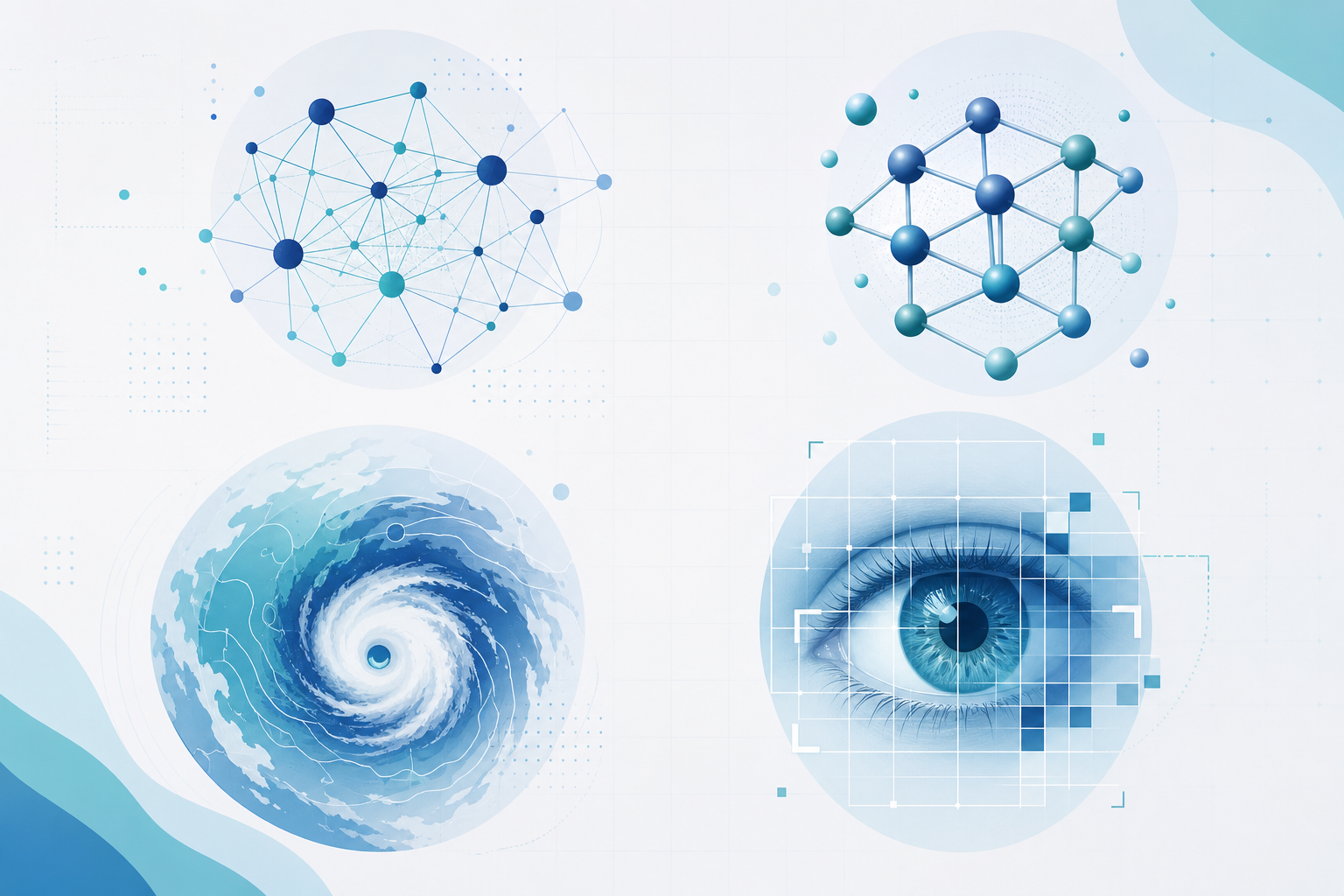
This article looks at the best real-world use cases of AI beyond coding and chatbots, with a focus on the model families that rarely make headlines: graph neural networks (GNNs), physics-informed AI, reinforcement learning, and computer vision.

Photo by Matheus Bertelli from Pexels: https://www.pexels.com/photo/laptop-displaying-ai-conversation-interface-30530411/
Introduction
LLMs are a single branch of a much larger field. The transformer architecture that powers ChatGPT is brilliant at modeling sequences of words, but the world is not made only of text. It is made of molecules, road networks, fluids, magnetic fields, images, and time series — structures with their own mathematics. Different problems call for different model architectures, and the AI delivering measurable value in science, engineering, healthcare, and logistics is often purpose-built for the shape of its data.
Understanding these other forms of AI matters for business leaders and developers alike. The next competitive advantage in many industries will not come from prompting a chatbot better than your competitor — it will come from choosing the right kind of model for the problem at hand.
Graph Neural Networks: AI That Thinks in Connections
Most neural networks expect neat, grid-like inputs: a string of words, a rectangular image, a fixed-length vector. But enormous amounts of the world’s most valuable data are relational — they describe how things connect. Roads connect at intersections. Atoms bond into molecules. People connect on social platforms. Transactions link accounts.
A graph neural network (GNN) is designed precisely for this. Instead of rows and columns, it operates on nodes (entities) and edges (the relationships between them), letting information flow along connections so each node learns from its neighbors. This makes GNNs uniquely suited to problems where structure is the signal.
Real-World Use Cases for GNNs
- Navigation and traffic prediction. Google DeepMind partnered with Google Maps to model road networks as graphs — road segments as nodes, intersections as edges — and improve the accuracy of estimated arrival times. The collaboration reported ETA accuracy improvements of up to 50% in cities including Berlin, Jakarta, São Paulo, Sydney, Tokyo, and Washington, D.C. Every time your map warns you about a slowdown that hasn’t started yet, a GNN is likely involved.
- Discovering new materials. DeepMind’s GNoME (Graph Networks for Materials Exploration) used GNNs to predict the stability of inorganic crystals, identifying 2.2 million new structures, of which roughly 380,000 are predicted to be stable candidates for synthesis — an order-of-magnitude expansion in known stable materials. These could feed into better batteries, superconductors, and chips.
- Drug discovery. Molecules are naturally graphs of atoms and bonds, so GNNs excel at predicting molecular properties, toxicity, and binding affinity — helping pharmaceutical researchers screen vast chemical libraries before stepping into the lab.
- Fraud detection and recommendations. Banks and fintechs model accounts and transactions as graphs to spot suspicious patterns that look normal in isolation but reveal fraud rings when viewed as a network. The same relational reasoning powers product and content recommendations at internet scale.
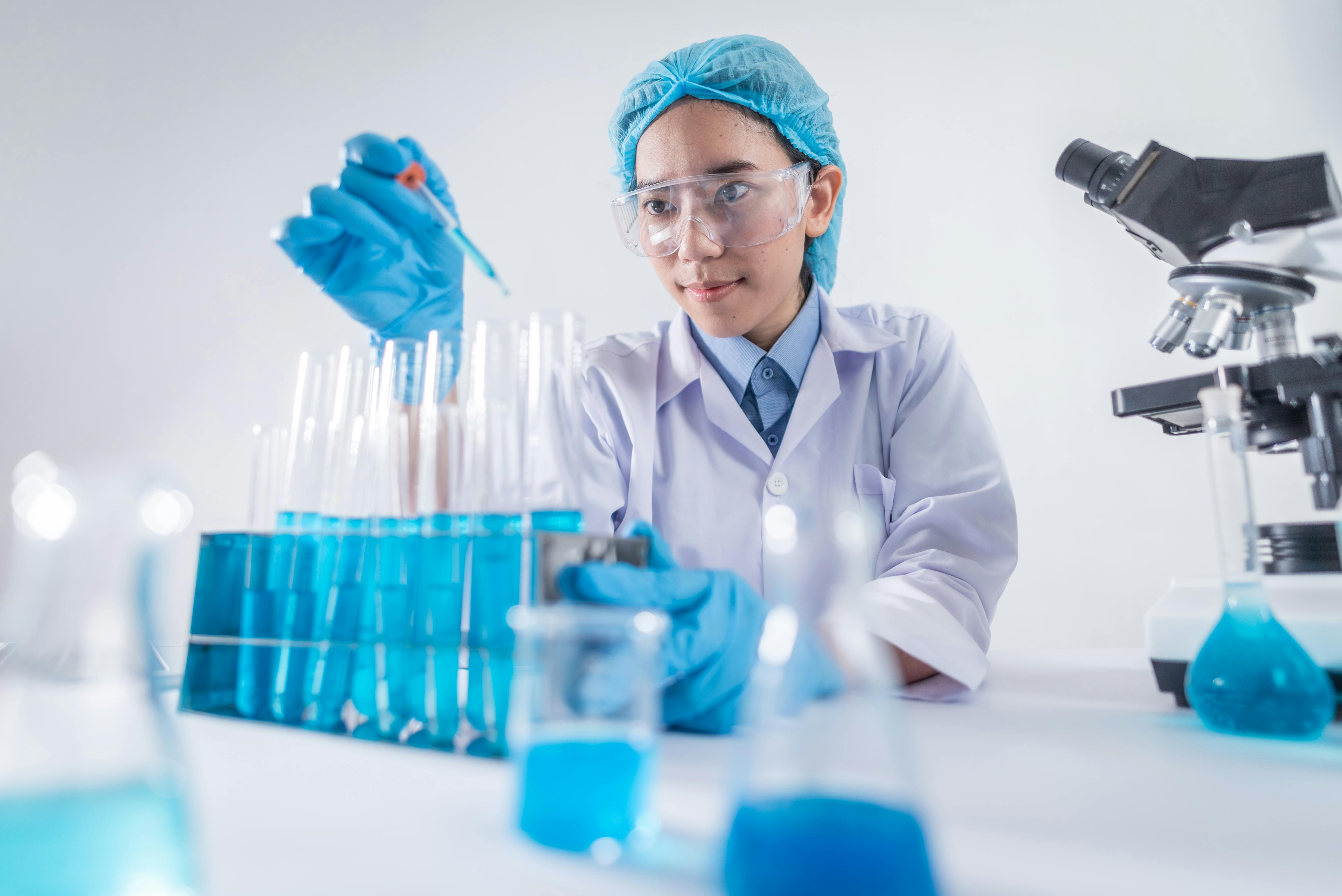
Photo by Chokniti Khongchum from Pexels: https://www.pexels.com/photo/photo-of-female-scientist-working-on-laboratory-3938023/
Physics-Informed AI: Teaching Models the Laws of Nature
Standard machine learning learns purely from data. But in science and engineering, we often already know the governing equations — the laws of fluid dynamics, heat transfer, electromagnetism. Physics-informed AI bakes those laws directly into the model so its predictions cannot violate physical reality, even when training data is scarce or noisy.
The best-known example is the physics-informed neural network (PINN), which adds the relevant differential equations into the model’s training objective. The result is a model that respects conservation of mass, momentum, and energy — making it far more trustworthy than a black box for safety-critical systems.
Real-World Use Cases for Physics-Informed AI
- Weather forecasting. DeepMind’s GraphCast — itself a graph neural network trained on decades of reanalysis data — predicts hundreds of weather variables up to 10 days ahead in under a minute on a single machine, and outperformed the gold-standard ECMWF system on more than 90% of test targets. Notably, it predicted Hurricane Lee’s landfall in Nova Scotia nine days in advance, three days earlier than traditional models. AI-driven forecasting from GraphCast, FourCastNet, and similar models is reshaping meteorology.
- Engineering digital twins. Physics-informed models act as fast, accurate surrogates for expensive simulations like computational fluid dynamics (CFD) and finite-element analysis. Recent work applies them to eVTOL aircraft flight dynamics, spacecraft thermal simulation, and aircraft-engine condition monitoring, enabling real-time “digital twins” that mirror physical systems without manual mesh generation.
- Energy and climate modeling. From subsurface flow in geothermal and oil reservoirs to power-grid dynamics, physics-informed methods let engineers run faster simulations while staying anchored to real physics.

Photo by Johannes Plenio from Pexels: https://www.pexels.com/photo/island-during-golden-hour-and-upcoming-storm-1118873/
Reinforcement Learning: AI That Learns by Doing
Reinforcement learning (RL) is the branch of AI behind game-playing milestones like AlphaGo, but its real value increasingly lies in control problems — situations where an agent must take a sequence of actions to maximize a long-term outcome. RL learns through trial and error, often in simulation, then transfers what it learns to the real world.
Real-World Use Cases for Reinforcement Learning
- Nuclear fusion control. In a landmark 2022 study published in Nature, DeepMind and EPFL’s Swiss Plasma Center trained an RL agent to control the magnetic coils of the TCV tokamak, autonomously shaping and sustaining superheated plasma — including exotic configurations like “snowflake” shapes and dual plasma “droplets.” It was one of the most complex real-world systems RL has ever been applied to.
- Chip design. RL has been used to optimize the physical layout of computer chips — placing components to minimize power and area — compressing work that once took engineers weeks.
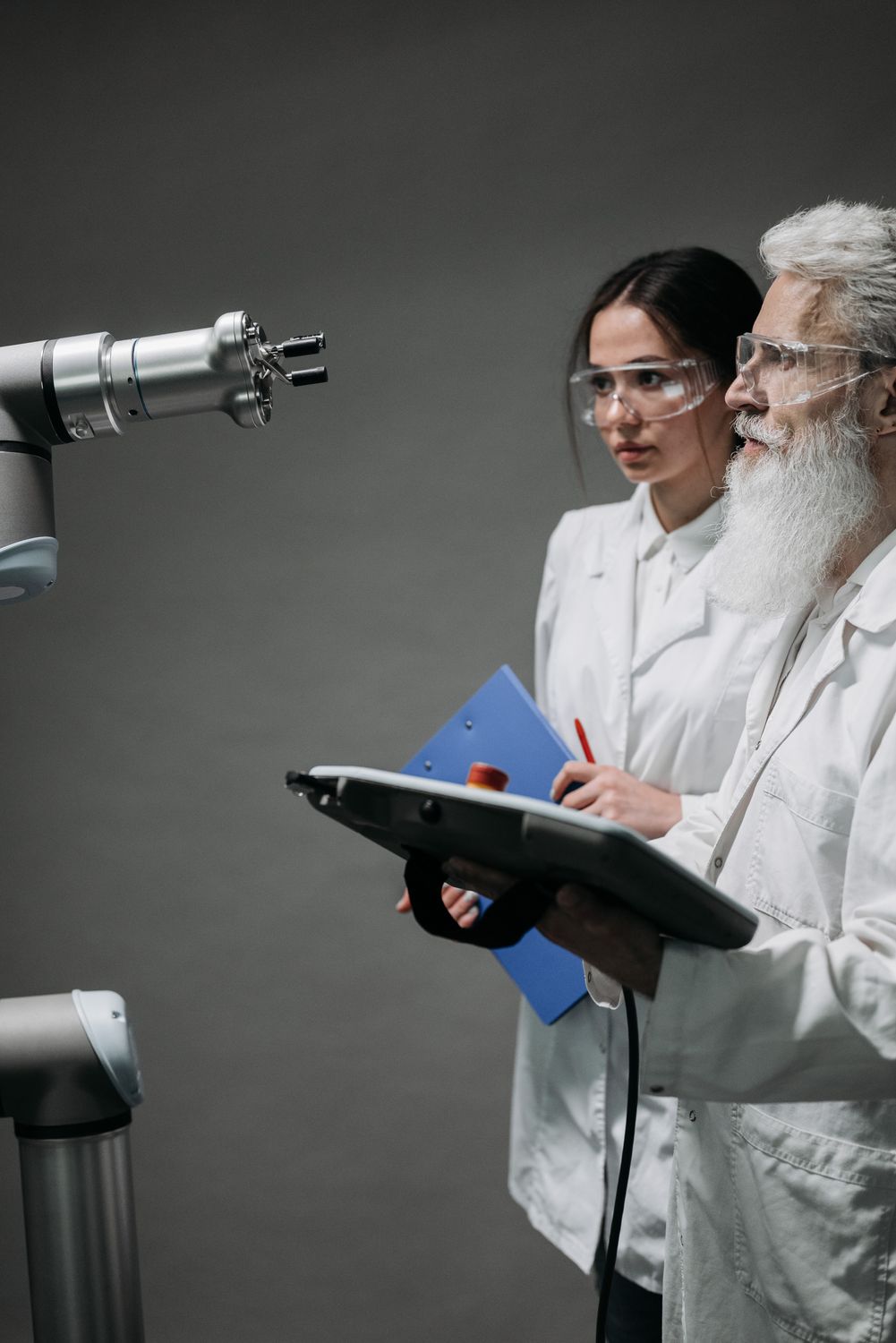
- Robotics and logistics. From warehouse robots to manipulation and locomotion, RL helps machines learn motor skills and adapt to messy, changing environments.
- Industrial efficiency. RL has been applied to tune systems such as data-center cooling, trimming energy consumption in facilities that are notoriously expensive to run.
Computer Vision and Other Non-LLM AI
Long before chatbots, computer vision — much of it built on convolutional neural networks (CNNs) — was already AI’s most deployed commercial technology, and it remains indispensable.
- Medical imaging. Vision models flag tumors in radiology scans, detect diabetic retinopathy in eye images, and triage cases — extending the reach of specialists, especially in regions with physician shortages.
- Manufacturing and agriculture. Cameras paired with vision models catch defects on production lines in milliseconds and monitor crop health from drones, enabling precision farming that targets water and fertilizer where they are needed.
- Generative models that aren’t LLMs. Diffusion models — the technology behind image generators — are now central to science. Tools like RFdiffusion design entirely new proteins, and diffusion-based weather models such as DeepMind’s GenCast produce probabilistic forecasts. These are generative AI, but not language models.
- The classics still working hard. Time-series forecasting models predict demand, energy load, and inventory; recommender systems drive e-commerce and streaming; and anomaly-detection models guard networks and payment systems. None of these need to “talk” to deliver enormous value.
Photo by Brett Sayles from Pexels: https://www.pexels.com/photo/server-racks-on-data-center-4508751/
Why This Matters for Businesses and Developers
The lesson here is not that LLMs are overrated — they are genuinely transformative for language, knowledge work, and software. The lesson is that AI is a toolbox, not a single tool. Here is what that means in practice:
- Match the model to the data. If your problem is relational (networks, molecules, logistics), a GNN may beat a general-purpose model. If it is governed by known physics, a physics-informed approach will be more accurate and more trustworthy. If it involves sequential decisions, reinforcement learning may be the answer.
- Smaller, specialized models can win. Many of the systems above are far smaller and cheaper to run than frontier LLMs, yet they outperform them decisively on their target task. You do not always need a giant model — you need the right one.
- Trust comes from structure. In safety-critical domains like aerospace, energy, and healthcare, physics-informed and constrained models offer something pure black boxes cannot: predictions that respect the laws of nature and can be audited.
- Opportunity for emerging tech hubs. For the Philippines and other markets building AI talent, this is an opening. The world has no shortage of chatbot integrations — but expertise in scientific AI, computer vision, forecasting, and optimization applied to local industries like agriculture, disaster preparedness, logistics, and energy is far scarcer and far more defensible.
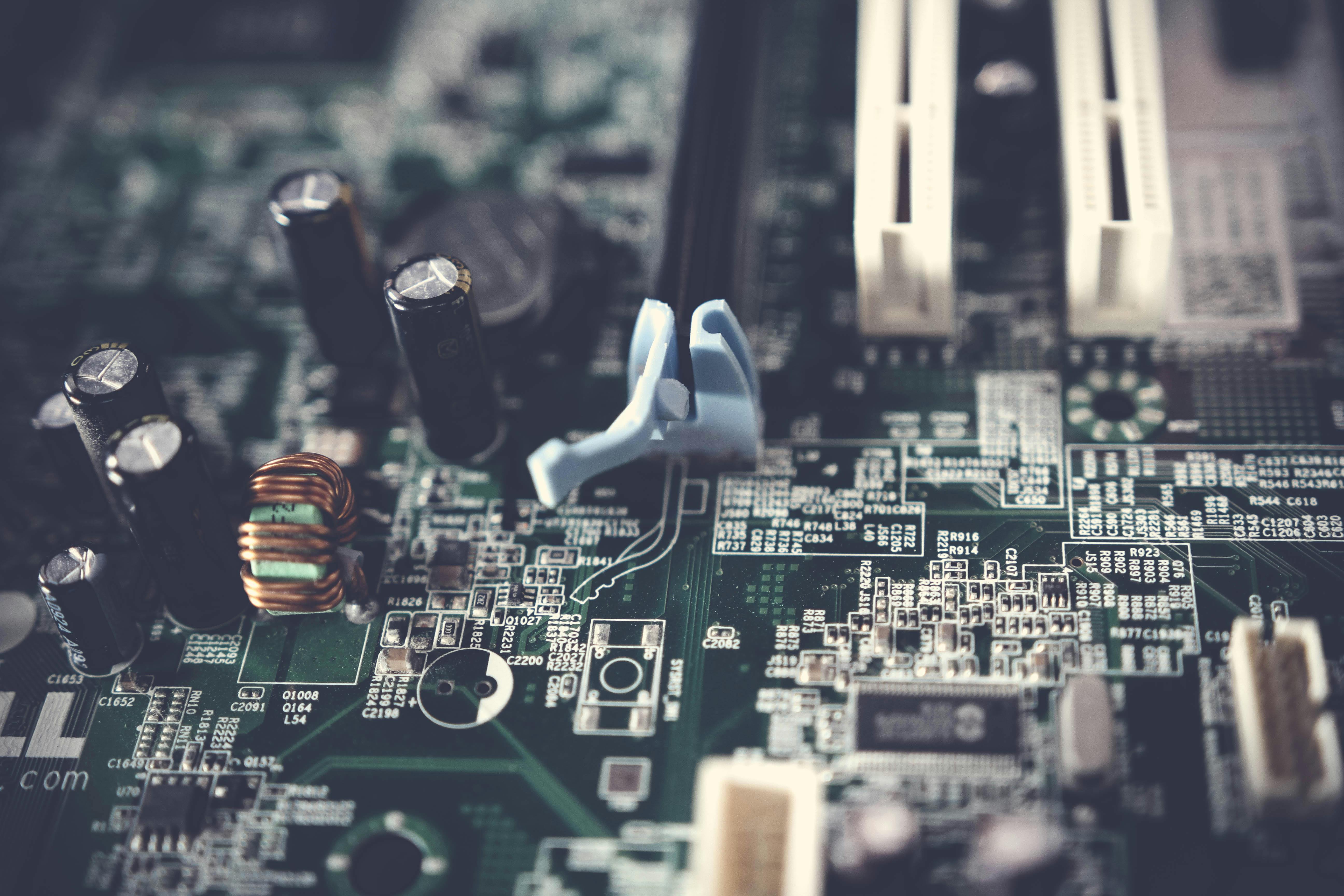
Photo by Pok Rie from Pexels: https://www.pexels.com/photo/tilt-shift-photography-of-motherboard-1432794/
Conclusion
The chatbot era has done something remarkable: it put AI in everyone’s hands and conversation. But it has also narrowed how many people imagine the technology. The most important AI in the world isn’t always the one you can talk to.
Graph neural networks are mapping the structure of molecules, materials, and cities. Physics-informed models are forecasting storms and simulating engines. Reinforcement learning is steering plasma inside fusion reactors. Computer vision is reading scans and inspecting factory lines. These systems will not write your emails — but they are quietly reshaping medicine, energy, transportation, and scientific discovery.
For organizations planning their AI strategy, the takeaway is simple: look past the chatbot. The biggest wins often belong to the teams who understand that the right architecture — not the most famous one — is what turns AI into real-world impact.
Note: This article reflects information available as of June 29, 2026. AI research advances rapidly; refer to the primary sources below for the latest results and figures.
References
- GraphCast: AI model for faster and more accurate global weather forecasting — Google DeepMind
- Learning skillful medium-range global weather forecasting — Science
- Traffic prediction with advanced Graph Neural Networks — Google DeepMind
- ETA Prediction with Graph Neural Networks in Google Maps — arXiv
- Millions of new materials discovered with deep learning (GNoME) — Google DeepMind
- Scaling deep learning for materials discovery — Nature
- Magnetic control of tokamak plasmas through deep reinforcement learning — Nature
- Accelerating fusion science through learned plasma control — Google DeepMind
- Physics-informed neural networks: A deep learning framework for solving forward and inverse problems — Journal of Computational Physics