
Photo by Gerome Yu from Pexels: https://www.pexels.com/photo/lights-on-building-during-the-night-6635321/
Every week, another headline tells us how AI is transforming business somewhere else: automated customer service in Singapore, AI-driven logistics in China, machine-assisted underwriting in the United States. Meanwhile, in offices across the Philippines, an employee is manually retyping numbers from a printed form into an Excel sheet — one that has merged cells where a database should be, colors where categories should be, and a filename like FINAL_v3_REVISED_USE_THIS.xlsx.
This is the uncomfortable position RP Innotech sees on the ground: the AI revolution is here, but most Philippine businesses do not yet have the systems that would let them join it. You cannot put intelligence on top of chaos. Before a business can benefit from AI, it needs digital foundations — and that is precisely where we are falling behind.

Photo by Tima Miroshnichenko from Pexels: https://www.pexels.com/photo/crumpled-papers-on-the-table-6913349/
Introduction
This article is RP Innotech's honest assessment of the state of business digitalization in the Philippines as of mid-2026. It is written for business owners and decision-makers who dream of using AI in their operations but suspect — correctly — that something is missing in between.
We will cover three things: why the gap exists (it is not a lack of ambition), why global AI pricing makes the gap harder to close for Filipino companies specifically, and what a realistic, affordable path to AI-readiness actually looks like. We build these systems for a living, so we will also be direct about how we help — but the diagnosis stands on its own, whoever you choose to work with.
The Uncomfortable Truth: Most of Us Are Not AI-Ready
The numbers describe what many of us already feel. A September 2025 study by the Philippine Institute for Development Studies found that only 14.9% of local firms use AI tools — despite 90% of companies owning computers and 81% having internet connections. The problem is not access to hardware. It is digital readiness: the data that AI would work on simply is not digitized yet.
Research on the Philippine MSME sector paints the same picture from another angle. Adoption is high for the easy, consumer-grade tools — social media marketing (around 80%) and digital payments (around 70%) — but collapses for the systems that actually structure a business: ERP systems sit at roughly 30% adoption and AI-based analytics at 25%, with respondents rating both as hard to adopt and poor in cost-effectiveness. And a 2026 industry report noted that while 77% of Filipino MSMEs are eager to adopt digital tools, only about 16% actually use them, citing skill gaps, perceived complexity, and affordability.
In other words: the ambition is there. The foundations are not.
The spreadsheet that became the system
Excel is a wonderful tool, and it deserves respect — it digitized Filipino business long before anything else did. But in far too many companies, a spreadsheet has quietly become the system of record: the inventory ledger, the payroll master file, the customer database, and the sales report, all at once.
The failure pattern is consistent, and if you run a business here, you have probably lived it:
- Formatting instead of structure. Merged cells, color-coded statuses, and notes typed into the margins make the file readable to one person and unusable to any software — including AI.
- Versions instead of history. Copies of copies circulate over email and messaging apps, and nobody is certain which file is the truth.
- People as integrations. Data moves between the sales sheet, the inventory sheet, and the accounting system by someone retyping it — slowly, expensively, and with errors.
Here is the connection to AI that many business owners miss: AI models are only as useful as the data you can feed them. An AI assistant cannot forecast your inventory if your inventory lives in fifteen inconsistent workbooks. As Michelle Alarcon, president of the Analytics and AI Association of the Philippines, put it when discussing why MSMEs struggle to adopt AI: many small firms simply cannot use it because their data is still not digitized.
Paperless remains a dream
The other foundation we have not laid is the paperless office. Contracts are printed to be signed, scanned to be emailed, and printed again to be filed. Government compliance still involves physical folders. Approvals mean signatures, and signatures mean someone physically walking a document between desks.
Cash tells the same story: the CPA Australia Asia-Pacific Small Business Survey found that in 2025, 77% of Filipino small businesses received at least half of their sales in cash — the highest share among all surveyed markets — even though digital payment options are widely available. Every cash transaction and every paper form is a data point that never enters a system, and therefore can never inform a dashboard, an automation, or an AI model.
Countries now "reaping the benefits of AI" did not skip this stage. They spent the previous two decades moving records, payments, and approvals into digital systems. AI arrived and found data waiting for it. Here, AI has arrived and found filing cabinets.
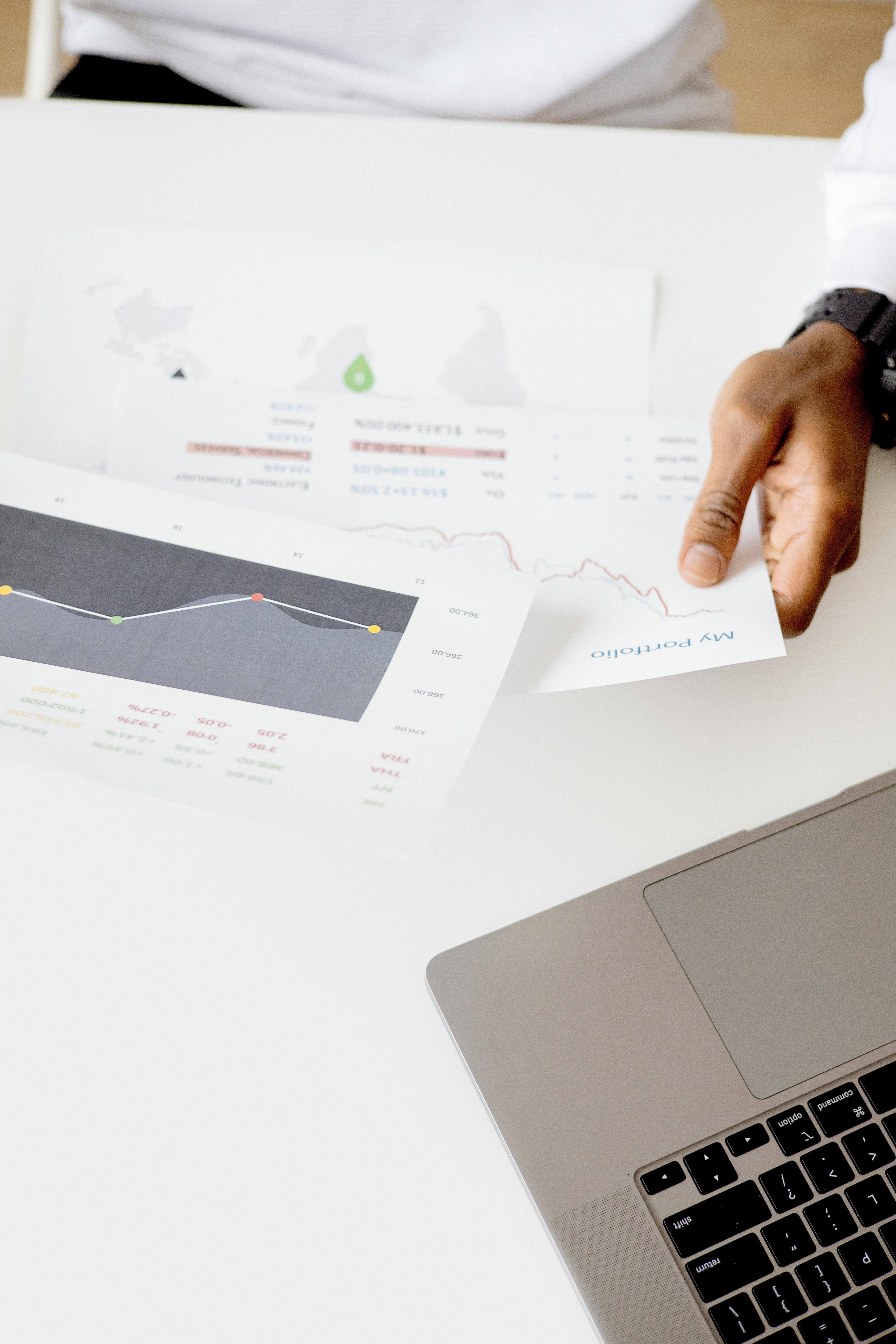
Photo by Hanna Pad from Pexels: https://www.pexels.com/photo/person-hand-laptop-working-6801643/
Global Prices, Local Wages: The Affordability Wall
There is a second problem, and it is one that businesses in wealthy countries rarely have to think about: AI is priced globally, but income is earned locally.
Consider a typical AI subscription at US$20 per month per user. At the current exchange rate of roughly ₱61.70 to the dollar, that is about ₱1,234 per user per month. Now hold that against the minimum wage: under Wage Order NCR-27, effective July 2026, the daily minimum wage in Metro Manila is ₱755. A single AI subscription seat costs more than a day and a half of minimum-wage work — every month, per employee. In the United States, that same subscription costs less than three hours of federal minimum-wage work.
The math gets harsher at scale. Equip a 20-person team with one US$20 tool each and you are committing around ₱24,700 per month, or nearly ₱300,000 per year — for one tool, before you have built anything. API access for custom applications is billed the same way: per-token prices set in US dollars, identical for a startup in Makati and a hedge fund in Manhattan. And with the peso trading at historically weak levels against the dollar in 2026, that bill quietly grows even when usage does not.
To businesses in high-income countries, these prices feel like loose change. To a Filipino SME, they are a meaningful line item that competes with payroll. The consequence is predictable and rational: companies hesitate, delay, or buy one shared account that three departments pass around — which defeats the purpose entirely.
We do not say this to discourage anyone. We say it because it changes the strategy. When AI capacity is expensive, you cannot afford to waste it on disorganized processes. Efficiency in your systems is what makes AI affordable.

Photo by Claudio Schwarz on Unsplash: https://unsplash.com/photos/person-holding-10-and-20-philippine-peso-bill-K0oN3uwvuEw
Why "Just Buy AI" Fails — and What Works Instead
Put the two problems together and the common failure mode becomes obvious. A business owner, excited by what they have seen AI do elsewhere, buys subscriptions for the team. Three months later, adoption is near zero. The tool could not read the company's data because the data was in paper and spreadsheets. The staff had no workflows to plug it into. The pesos spent produced a lesson instead of a return.
The sequence matters. Based on our work with Philippine businesses, AI adoption succeeds in this order:
- Digitize the records. Get contracts, forms, inventory, and customer information out of paper and into structured systems. Not into prettier spreadsheets — into databases with defined fields.
- Standardize the processes. Decide, explicitly, how an order flows from inquiry to delivery, and encode it in software so it happens the same way every time.
- Automate the repetitive. Once processes are digital and standard, the copy-paste work between systems can be automated — no AI required yet, and this step alone often pays for the whole project.
- Then apply AI where it earns its cost. With clean data and defined workflows, AI has something to work with: forecasting from real sales history, drafting responses from a real knowledge base, flagging anomalies in real transaction data. Applied this way, one well-placed AI integration can serve the whole company — a far better answer to global pricing than one subscription per employee.
Notice that the first three steps are not AI at all. They are the unglamorous digitalization work the Philippines skipped. That is the gap, and closing it is the actual project. There is encouraging evidence for businesses that do: the same CPA Australia survey found that 68% of Filipino small businesses that invested in technology in 2025 reported improved profitability, well above the Asia-Pacific survey average of 56%. When Philippine businesses do digitalize, it pays — the tragedy is only how few get there.
How RP Innotech Helps
This is the work RP Innotech was built for. We are a Filipino technology company, we price and scope for the Philippine market, and we have seen the inside of enough local operations to know that the journey starts from spreadsheets and paper — not from a Silicon Valley fantasy of what a company should look like.
Here is how our services map onto the path above:
- Digital Transformation. We start by mapping how your business actually runs — including the parts that live in one employee's head — and then move your records and workflows into digital systems, in an order that keeps the business running while it changes. Going paperless is not one big leap; it is a sequence of small, safe ones.
- Custom Software Development. Off-the-shelf ERP is one of the reasons adoption sits at 30%: it is expensive, rigid, and built for someone else's processes. We build systems shaped around your exact operations — an order-tracking system that mirrors how your warehouse really works, a client portal that speaks your industry's language — so your team adopts it instead of fighting it. Your Excel-native staff will recognize their own process in the software, minus the retyping.
- Cloud Solutions. Digitalization should not require buying servers. We deploy on cloud infrastructure that scales with you and is billed for what you use — which matters enormously when every dollar-denominated cost lands on a peso budget.
- AI Implementation. When the foundations are in place, we identify the specific points in your operation where AI genuinely earns its cost, and integrate it there. Because we architect these as shared services rather than per-seat subscriptions, the global-pricing problem shrinks: the company pays for the AI capacity it actually uses, and every department benefits from it.
Two principles run through all of it. First, sequence over splash — we would rather deliver a working digital order system this quarter than a stalled "AI transformation" this year. Second, cost honesty — we will tell you when a ₱0 process fix beats a ₱1,200-per-seat subscription, because our job is your outcome, not a vendor's invoice.

Photo by Andrea Piacquadio from Pexels: https://www.pexels.com/photo/multiethnic-partners-discussing-project-using-laptop-on-meeting-in-office-3862089/
Where to Start This Quarter
If you want to move before talking to anyone — us included — here are four steps any Philippine business can take now:
- Inventory your spreadsheets. List every workbook your business would suffer without. For each, note who edits it, what feeds it, and what it feeds. This list is your de facto systems architecture, and seeing it written down is usually motivation enough.
- Pick your worst paper process. The one involving printing, signing, scanning, and re-printing. Measure how many hours per week it consumes across everyone who touches it. That number, multiplied by wages, is your budget justification.
- Stop the copy-paste. Find one place where an employee manually transfers data between two systems, and make eliminating it your first automation project. Small, cheap, measurable.
- Write down your AI dream — specifically. Not "we want to use AI," but "we want to know which products to reorder before we run out" or "we want customer inquiries answered within a minute." A specific dream can be costed, sequenced, and built toward. A vague one can only be subscribed to.
Conclusion
The Philippines is not behind on AI because Filipinos lack talent or ambition — the eagerness is measurable, at 77% of MSMEs wanting digital tools. We are behind because AI landed on foundations we have not finished building, and because its global price tag weighs far heavier on a peso income than on a dollar one.
But that diagnosis contains its own good news. The gap is not mysterious, and it is not permanent. It is spreadsheets that need to become systems, paper that needs to become data, and processes that need to be defined once and automated forever. That work is well understood, it pays for itself along the way, and it is exactly what makes AI affordable when you finally deploy it — because a business with clean data and efficient processes needs far less AI to get far more from it.
The businesses that do this groundwork in 2026 will be the ones enjoying AI in 2027 while their competitors are still hunting for the right version of the file. If you would like a partner for that journey — one that prices for this market and starts from where you actually are — talk to us.
Note: This article reflects statistics, wage rates, and exchange rates available as of July 20, 2026. Subscription prices, the USD/PHP exchange rate, and minimum wage figures change over time; the underlying argument does not.
References
- Philippines steps up push for MSMEs to adopt AI — BusinessWorld
- Digital Innovation and Entrepreneurial Success in the Philippine MSME Sector: Challenges and Opportunities
- The SME investment paradox: How to grow while cutting costs in 2026 — Inquirer Business
- CPA Australia Asia-Pacific Small Business Survey 2025-2026 — Philippines summary
- Wage Order No. NCR-27 — National Wages and Productivity Commission
- USD to PHP exchange rate — Xe