Photo by Matheus Bertelli from Pexels: https://www.pexels.com/photo/close-up-of-geforce-rtx-graphics-card-34552802/
Nvidia reportedly wants to buy Hugging Face for $12.9 billion. If the transaction is real and eventually closes, the company that supplies much of the computing power behind modern AI would also own the platform where millions of developers discover, share, test, and deploy open models. That is not simply a chip company buying a software startup. It is a possible change in who controls one of the most important distribution layers in the open AI ecosystem.
But the first responsibility is accuracy: there is no official acquisition announcement from Nvidia or Hugging Face as of August 30, 2026. The Information reported that an agreement had been reached, while separate reporting described serious talks without a signed deal. Neither company had publicly confirmed the terms. This article therefore examines a reported transaction—not a completed acquisition—and asks what it would mean if it proceeds.
Photo by Christina Morillo from Pexels: https://www.pexels.com/photo/two-women-looking-at-the-code-at-laptop-1181263/
Introduction
Hugging Face is often described as the GitHub of AI, but the comparison only captures part of its importance. The Hugging Face Hub hosts models, datasets, demonstrations, documentation, and community discussions. Its open-source libraries—including Transformers, Diffusers, Datasets, and the broader ecosystem around them—have helped standardize how developers download, fine-tune, evaluate, and run machine-learning models.
That position gives Hugging Face influence without requiring it to create every model itself. A researcher can publish a model. A startup can build a product around it. An enterprise can evaluate it against alternatives. A hardware company can optimize it for its accelerators. Hugging Face sits where these groups meet.
Nvidia already sits beneath much of that activity. Its GPUs power a large share of AI training and inference, while CUDA, TensorRT, NIM, DGX Cloud, and other software and infrastructure products make Nvidia more than a hardware vendor. The two companies have also worked together for years. Nvidia participated in Hugging Face's 2023 funding round, which valued the startup at $4.5 billion, and their technical collaborations have connected Hugging Face workflows with Nvidia compute for training and inference.
A reported $12.9 billion acquisition would turn that close partnership into ownership. The strategic logic is clear. The harder question is whether the openness and neutrality that made Hugging Face valuable can survive inside the company with the strongest commercial position in AI compute.
What Has Actually Been Reported
The current public record contains conflicting levels of certainty:
- The Information, as summarized by CNBC and other outlets, reported that Nvidia agreed to acquire Hugging Face for $12.9 billion.
- CNBC reported that a source familiar with the matter confirmed acquisition discussions had been ongoing and recent.
- Business Insider, according to follow-on coverage, described talks at a valuation above $13 billion but said no agreement had been signed and negotiations could still fail.
- Neither Nvidia nor Hugging Face had issued an official announcement or disclosed transaction terms by August 30.
The distinction matters. An agreed transaction can still face due diligence, contractual conditions, and regulatory review. An unsigned negotiation can disappear entirely. Until either company publishes a statement, readers should avoid treating the reported price, structure, and outcome as settled facts.
What is established is the history around the talks. Nvidia joined other major technology companies in Hugging Face's $235 million Series D financing in 2023. The companies later deepened their infrastructure relationship through Nvidia DGX Cloud, NIM-based inference, and Training Cluster as a Service. Hugging Face's own 2026 review of open source described Nvidia as its strongest corporate contributor, even as the platform continued supporting models and deployment paths across competing hardware and clouds.
This was already a strategically close relationship. The reported acquisition would make it structurally different.
Why Hugging Face Is Worth More Than Its Revenue
A $12.9 billion price would be almost three times Hugging Face's 2023 valuation. Reporting has also placed the company's annualized revenue far below what would normally justify such a purchase on conventional software multiples. The premium makes more sense when Hugging Face is understood as ecosystem infrastructure.
It is where models are discovered
Developers do not evaluate every model ever published. They search, follow trends, compare model cards, inspect downloads, and trust community signals. The platform that organizes this process influences which models receive attention and which tools become standards.
It is where open AI becomes usable
Publishing model weights is not enough. Developers need libraries, examples, tokenizers, configuration files, datasets, evaluation tools, inference endpoints, and deployment integrations. Hugging Face turns disconnected research artifacts into something closer to a usable supply chain.
It has network effects
Model creators publish where users already are. Users go where model creators publish. Tool vendors integrate where both groups gather. A competitor can reproduce individual features, but recreating the community and accumulated catalog is much harder.
It can create demand for compute
Every model that becomes easier to discover, fine-tune, and deploy creates potential demand for accelerators. For Nvidia, owning the path from model discovery to optimized deployment could make the entire journey smoother—and could direct more of that journey toward Nvidia infrastructure.
Photo by Eric Lozaga from Pexels: https://www.pexels.com/photo/modern-library-archive-storage-room-with-compact-shelving-31139000/
The Strategic Prize: From Chips to the Model Marketplace
Nvidia's position in AI is already vertically broad:
- Hardware: GPUs, networking, and complete systems
- Developer platform: CUDA and optimized libraries
- Model tooling: training, fine-tuning, inference, and deployment software
- Cloud access: DGX Cloud and partner capacity
- Models and blueprints: Nvidia's own open models, reference workflows, and enterprise components
Hugging Face would add a major discovery and distribution layer. A developer could find a model on Hugging Face, fine-tune it using Nvidia-backed infrastructure, optimize it with Nvidia software, and deploy it to Nvidia hardware without leaving a connected ecosystem.
That integration could be genuinely useful. Today, moving a model from a public repository to reliable production involves format conversions, dependency conflicts, quantization choices, hardware testing, security review, and deployment engineering. Nvidia has the resources and technical depth to remove much of that friction.
The business case is equally strong. Nvidia does not need every Hugging Face interaction to generate direct platform revenue. If easier open-model adoption produces more training and inference workloads, Nvidia benefits from additional demand for its hardware and services. Hugging Face could function as both a software business and an ecosystem accelerator.
This is why the reported deal is more consequential than another AI startup acquisition. Nvidia would not only sell the machinery. It could own part of the marketplace where developers decide what to run on that machinery.
What Developers and Businesses Could Gain
It is easy to frame the reported acquisition only as a threat to openness. That would ignore credible benefits.
Better performance and simpler deployment
Deeper integration could give Hugging Face models first-class support for Nvidia's latest hardware, optimized inference libraries, quantization techniques, and distributed training systems. Enterprises might move from experimentation to production faster.
More infrastructure investment
Operating a global model hub is expensive. Storage, bandwidth, security, malware scanning, model evaluation, enterprise controls, and hosted inference all require sustained investment. Nvidia has the capital and infrastructure to expand these services.
Stronger enterprise support
Many companies like open models but struggle with governance, service guarantees, security reviews, and deployment accountability. Nvidia could combine Hugging Face's open ecosystem with mature enterprise sales and support.
Continued backing for open models
Nvidia has a commercial reason to support an active open-model ecosystem: more models and more deployments create more demand for compute. The company has publicly promoted open models and contributed heavily to Hugging Face. Ownership would not automatically mean closing the platform.
These benefits are plausible, but they depend on execution and governance. Faster Nvidia deployment is not the same thing as preserving a neutral platform.
The Central Risk: Can the Hub Remain Neutral?
Hugging Face currently serves companies that compete directly with Nvidia, including alternative chipmakers, cloud providers, and software platforms. Developers expect to find models that can run on Nvidia GPUs, AMD GPUs, Google TPUs, Apple Silicon, CPUs, and specialized accelerators.
If Nvidia becomes the owner, several questions become unavoidable:
- Will competing hardware receive equal integration quality and visibility?
- Will search, recommendations, benchmarks, and featured models remain vendor-neutral?
- Will hosted services make Nvidia deployment the default even when another platform is cheaper or more appropriate?
- What operational or usage data could Nvidia gain from the platform?
- Will researchers and companies feel comfortable publishing work that reduces dependence on Nvidia hardware?
- Can community governance meaningfully challenge the commercial priorities of the parent company?
There is no evidence that Nvidia has already decided to disadvantage competitors. The concern is structural: an open marketplace is harder to trust when one of its most powerful suppliers owns it.
Open-source licenses provide some protection. Public code and model weights generally cannot be made closed retroactively when their licenses grant continuing rights. Communities can fork libraries, mirror repositories, and build alternative services.
However, “the code can be forked” is not a complete answer. A fork does not instantly reproduce millions of users, model histories, discussion threads, download statistics, hosted demos, security systems, enterprise contracts, or brand trust. The open-source assets may remain available while the network and infrastructure around them become harder to replace.
Regulatory Review Would Be About Vertical Power
If formally announced, a transaction of this scale would likely receive close regulatory attention. The concern would not simply be that Nvidia and Hugging Face sell the same product. They largely occupy different layers.
The issue is vertical integration: a dominant supplier of AI compute acquiring a major platform for distributing and deploying models that consume that compute.
Regulators could examine whether Nvidia would have the ability and incentive to:
- Favor Nvidia-compatible models or deployment options
- Reduce visibility or interoperability for rival hardware
- Bundle services in ways competitors cannot match
- Use platform data to strengthen its position in adjacent markets
- Make it harder for developers to choose non-Nvidia infrastructure
Those questions do not prove that a deal should be blocked. They explain why promises of continued openness would need concrete safeguards, transparent policies, and possibly enforceable commitments.
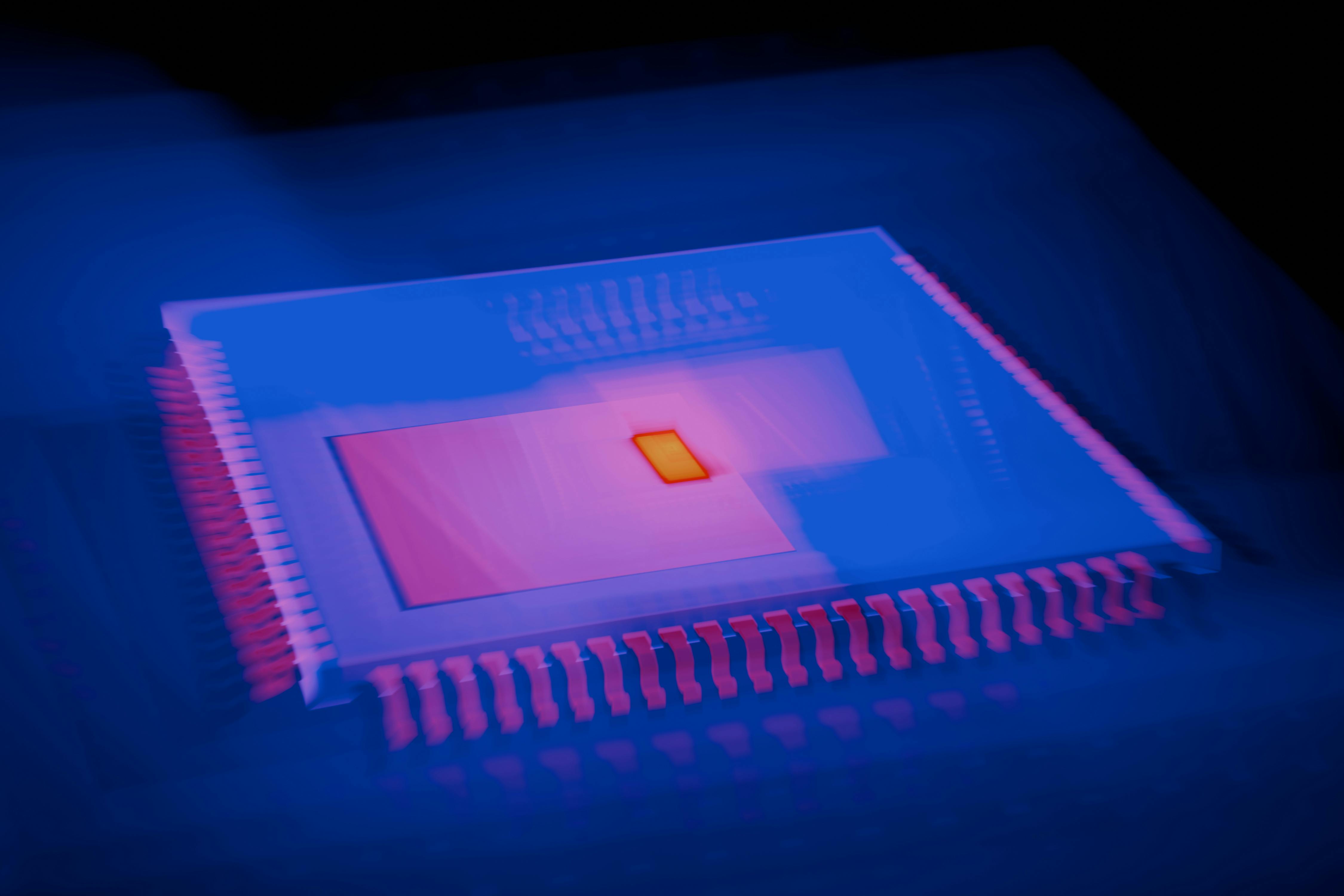
Photo by Steve A Johnson from Pexels: https://www.pexels.com/photo/abstract-image-of-a-microchip-with-heatmap-colors-28767589/
What This Means for Philippine Businesses and Developers
The Philippines benefits enormously from open AI. Local startups and engineering teams rarely have the budgets to train frontier models from scratch. Open models allow them to build document systems, customer-service tools, local-language applications, analytics, and automation while controlling more of the cost and deployment stack.
An Nvidia-owned Hugging Face could improve that access if it makes powerful models easier to deploy, provides affordable hosted infrastructure, and invests in documentation and education. Better optimization can reduce the amount of compute—and therefore the dollar-denominated cost—required to serve an application.
But deeper platform concentration also creates risk for a market sensitive to global pricing. If the convenient path increasingly assumes premium Nvidia infrastructure, Filipino companies may face fewer practical choices even while model weights remain technically open.
The appropriate response is not to abandon Hugging Face or Nvidia. Both are valuable parts of the AI ecosystem. It is to preserve operational choice:
- Record exact model revisions and licenses. Do not depend on a model name that can change underneath an application.
- Mirror critical artifacts. Keep authorized copies of essential weights, tokenizers, configuration files, and documentation in storage the company controls.
- Test more than one deployment target. Understand whether important workloads can run through another cloud, accelerator, or local environment.
- Separate model code from hosted APIs. A model advertised as open may still be consumed through a proprietary endpoint that creates lock-in.
- Measure total cost in pesos. Include compute, data transfer, engineering time, support, and currency exposure—not only the advertised token rate.
- Maintain an AI asset inventory. Know which models, datasets, licenses, platforms, and hardware assumptions each production workflow depends on.
These practices are useful whether the acquisition closes or not. The reported deal simply makes their importance visible.
How RP Innotech Can Help
RP Innotech helps businesses turn open AI from an experiment into dependable infrastructure. That includes:
- Selecting models according to business requirements, language needs, security, and total cost
- Evaluating hosted APIs against self-hosted and hybrid deployment
- Designing model and hardware portability into custom applications
- Building controlled model registries and deployment pipelines
- Reviewing data, licensing, monitoring, and governance requirements
- Optimizing cloud architecture for Philippine budgets and operating conditions
The goal is not to avoid major platforms. It is to use them without surrendering the ability to change direction. A company should benefit from Nvidia's performance and Hugging Face's ecosystem while retaining control of its data, application logic, evaluation standards, and critical artifacts.
Conclusion
Nvidia's reported $12.9 billion pursuit of Hugging Face makes strategic sense. Nvidia already powers much of AI's compute layer; Hugging Face organizes much of the open-model layer above it. Combining the two could make open models easier to train, optimize, and deploy at enterprise scale.
The same combination would concentrate influence. The supplier of the machinery could also own the marketplace where developers discover what to run, how to optimize it, and where to deploy it. Whether that produces a stronger open ecosystem or a more Nvidia-centered one would depend on governance, interoperability, community trust, and regulatory conditions—not on the word “open” alone.
For businesses, the lesson is practical even before the reporting is confirmed: open models do not automatically create an open architecture. Real freedom comes from portable data, controlled artifacts, tested deployment choices, clear licenses, and systems designed to move.
If your organization is evaluating open models or planning an AI deployment, talk to RP Innotech about building a solution that captures the benefits of today's ecosystem without becoming trapped by tomorrow's ownership changes.
Note: This article reflects information available as of August 30, 2026. Nvidia and Hugging Face had not publicly confirmed an acquisition, final price, signed agreement, or closing timeline at publication. The reported transaction may change or may not proceed.
References
- CNBC — Nvidia reportedly agrees to buy Hugging Face for $12.9 billion
- TechCrunch — Nvidia closes in on Hugging Face acquisition
- Reuters — Hugging Face valued at $4.5 billion in 2023 funding round
- Nvidia — Nvidia and Hugging Face connect developers to generative AI supercomputing
- Hugging Face — Introducing Training Cluster as a Service with Nvidia
- Hugging Face — State of Open Source on Hugging Face: Spring 2026